Here you’d be looking at a long strings of @@@@@@@@@ instead of information on Queen Kapiolani and Puna. 1876.

NEWS ITEMS FROM PUNA.

Please let us shake hands, your Captain and I, and insert my small contribution in an empty space of your delicate body.

On the evening of the 12th of Nov., Queen Kapiolani and her younger sister Kapooloku, Hon. L. Kaina, and the other companions of the Queen left Hilo Hanakahi and the Kanilehua rain. And the land travelling canoes that evening were pointed towards the seas of the rustling pandanus groves, and they reposed at the home of R. Lyman, Esq., along with the woman who lives in the sea of Haena in Keaau.

And the next morning, the entourage of the Queen travelled on to see the sounding pebbles of Aalamanu, and from there, to Keauhou and the shelter of coconut fronds. And aloha was shown between the Queen and her humble subjects.

And here the Queen asked for someone to take them to see the Waikoolihilihi and and the tall Hopoe Lehua, and the writer of this article patiently took them. We saw the hollow pahoehoe [uha pahoehoe?] of Hopoe, and inhaled the lima [?] and the seaweed growing upon it. And we soon looked upon the famous pool Ka Wai Koolihilihi; but there was no water in the pool as it was sucked up by the heat of the sun, for it has been months of nice weather here in Puna; there was no water to drink. There too were the lehua @@@@
@@@@@@@@@@@@@@@@@@@@@@@@@@@@@@@@@@@@@@
@@@@@@@@@@@@@@@@@@@@@@@@@@@@@@@@@@@@@@
@@@@@@@@@@@@@@@@@@@@@@@@@@@@@@@@@@@@@@
@@@@@@@@@@@@@@@@@@@@@@@@@@@@@@@@@@@@@@
@@@@@@@@@@@@@@@@@@@@@@@@@@@@@@@@@@@@@@
@@@@@@@@@@@@@@@@@@@@@@@@@@@@@@@@@@@@@@
@@@@@@@@@@@@@@@@@@@@@@@@@@@@@@@@@@@@@@
@@@@@@@@@@@@@@@@@@@@@@@@@@@@@@@@@@@@@@
@@@@@@@@@@@@@@@@@@@@@@@@@@@@@@@@@@@@@@
@@@@@@@@@@@@@@@@@@@@@@@@@@@@@@@@@@@@@@

@@@@@@@@@@@

@@@@@@@@@@@

@@@@@@@@@@@@@@@@@@@@@@@@@@@@@@@@@@@@@@
@@@@@@@@@@@@@@@@@@@@@@@@@@@@@@@@@@@@@@
@@@@@@@@@@@@@@@@@@@@@@@@@@@@@@@@@@@@@@
@@@@@@@@@@@@@@@@@@@@@@@@@@@@@@@@@@@@@@
@@@@@@@@@@@@@@@@@@@@@@@@@@@@@@@@@@@@@@
@@@@@@@@@@@@@@@@@@@@@@@@@@@@@@@@@@@@@@

When you look at the works reported by the church officials accomplished in their districts, the work of the Lord has progressed in some places but regressed in others. As for the pastor himself, the father’s work has been deft, there is nothing to fault, there is no obscene names to apply, his actions before his flock has been lively; and during the late evening hours of the day mentioned above, the meeting was adjourned. This group will meet again at Olaa on the 2nd of January, 1877. The church officials were hosted well at the home of Kalahiki with food for the body, and the aloha given by the locals was splendid. S. K. Po-opio

Keaau, Puna, H., Nov. 27, 1876.

[This paper was not typed from the unclear images available online, but from the originals. So luckily, all of those @@@@@@@@@@ portions have been transcribed and are available online. Still, it would still be worth getting the best images even of these pages, so that the typescript can be compared to the original for questionable phrases.

Now consider all of thousands of pages of newspaper with bad images that are being typescripted today. Now is the time to take clear images of them. Before typescripts are done. Why do double or triple the work? And perhaps more important, why risk having the pages touched again and again by people wanting to know what this @@@@ and that @@@@ are… Once the papers fall apart, it will be too late.]

(Lahui Hawaii, 12/21/1876, p. 2)
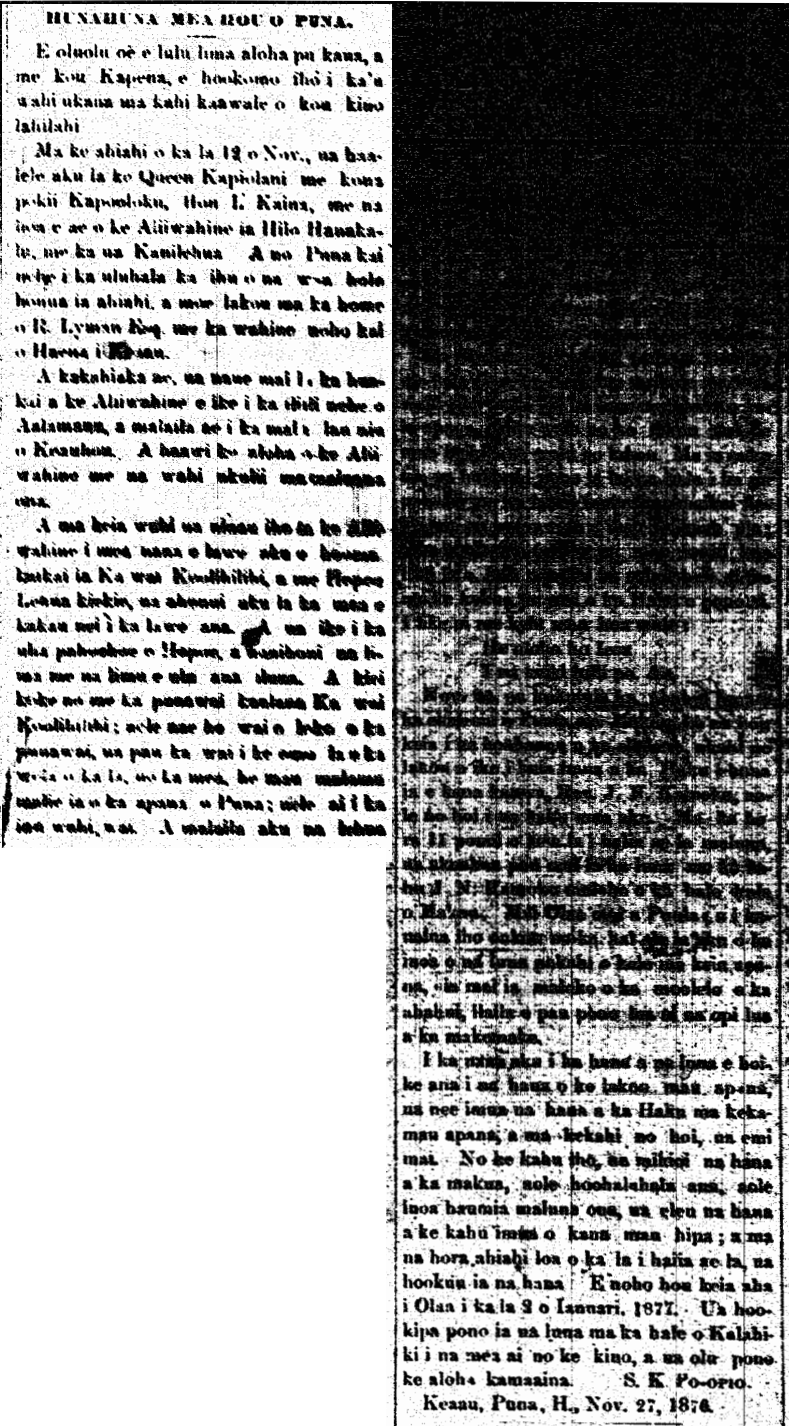
HUNAHUNA MEA HOU O PUNA.

Ka Lahui Hawaii, Buke II, Helu 52, Aoao 2. Dekemaba 21, 1876
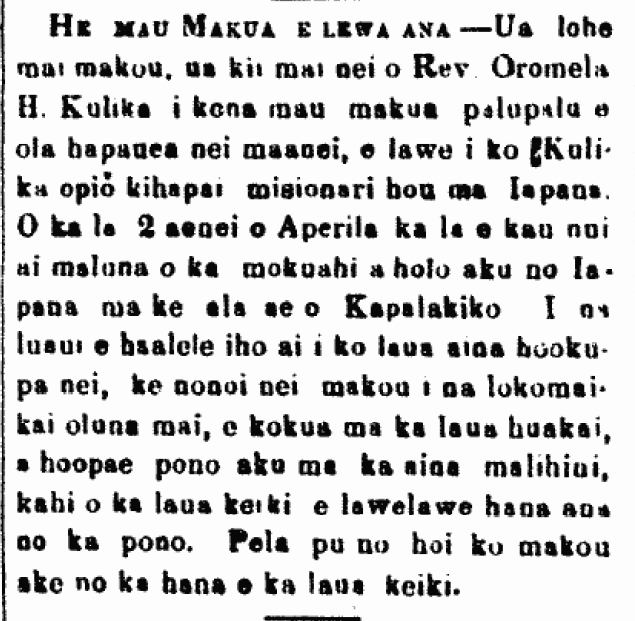
More on Orramel Gulick, 1874.

[Found under: “Local News”]

Parents will be voyaging—We hear that Rev. Orramel H. Gulick came to get his weak parents [Peter Johnson Gulick and Fanny Hinckley Thomas Gulick] living here in a feeble state to take them to the young Gulick’s [Luther Halsey Gulick] new missionary parish in Japan.It is on the coming 2nd of April that they will all board the steamship to make their journey to Japan by way of San Francisco. To his parents who are leaving this land which they grew accustomed, we hope for blessings from above, to help them on their journey, and to give them safe landing at this foreign land, where their child works for righteousness. So too is our hopes for the endeavors of their child.

[For more on Orramel Hinckley Gulick, see also: The Pilgrims of Hawaii, by Rev. and Mrs. Orramel Hinckley Gulick (1918).]

(Kuokoa, 3/14/1874, p. 2)

He mau Makua e lewa ana...

Ka Nupepa Kuokoa, Buke XIII, Helu 11, Aoao 2. Maraki 14, 1874.

On the trail of the Japanese New Testament gifted to Kalakaua, 2011.

[So i am still looking for that Bible given at the Yokohama Union Church to King Kalakaua, when he visited there in 1881. Check out these other articles found in The Friend]

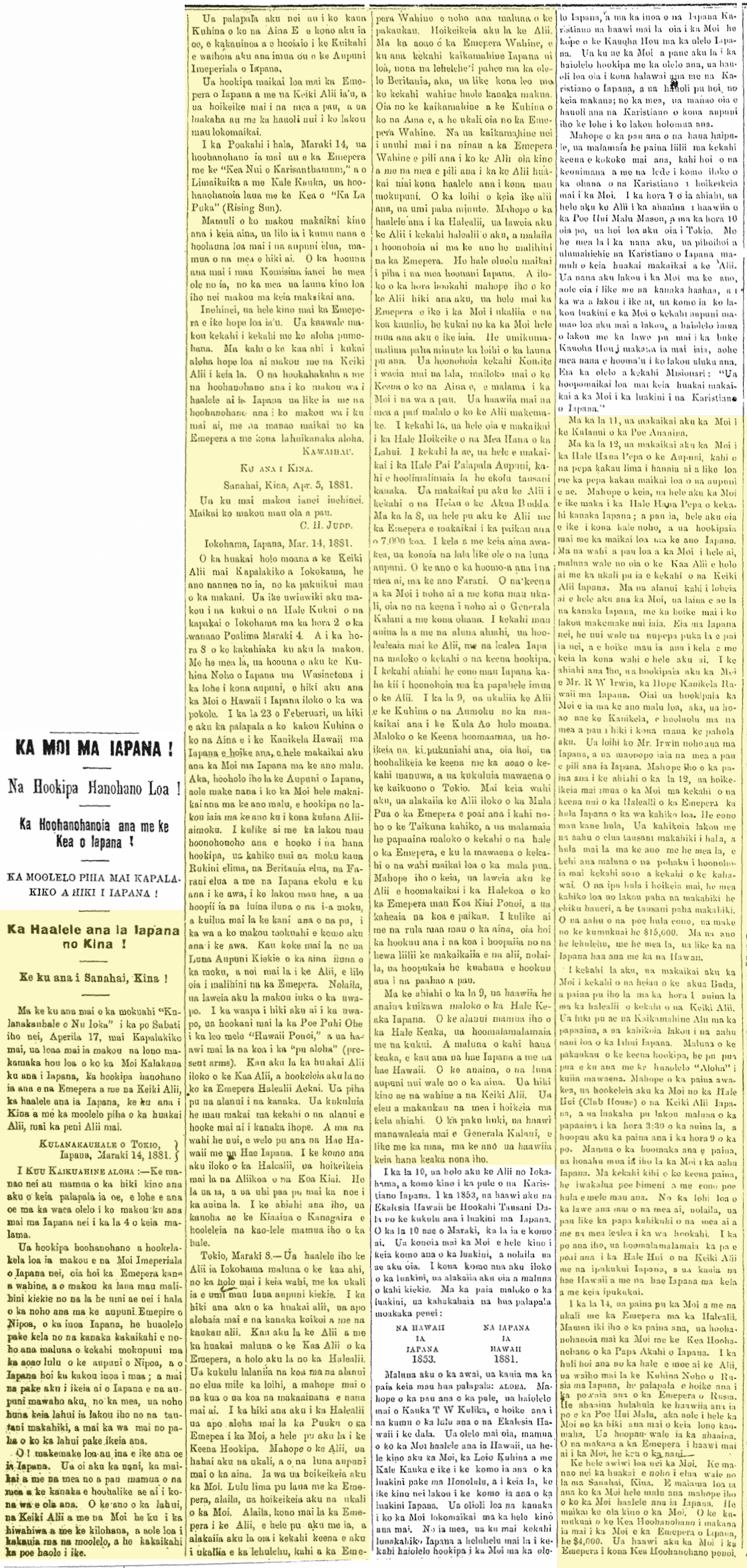
HIS MAJESTY IN JAPAN.

And the other article referred to therein,

Cast Thy Bread upon the Waters and Thou Shalt find it after Many Days.

Yokohama Union Church.

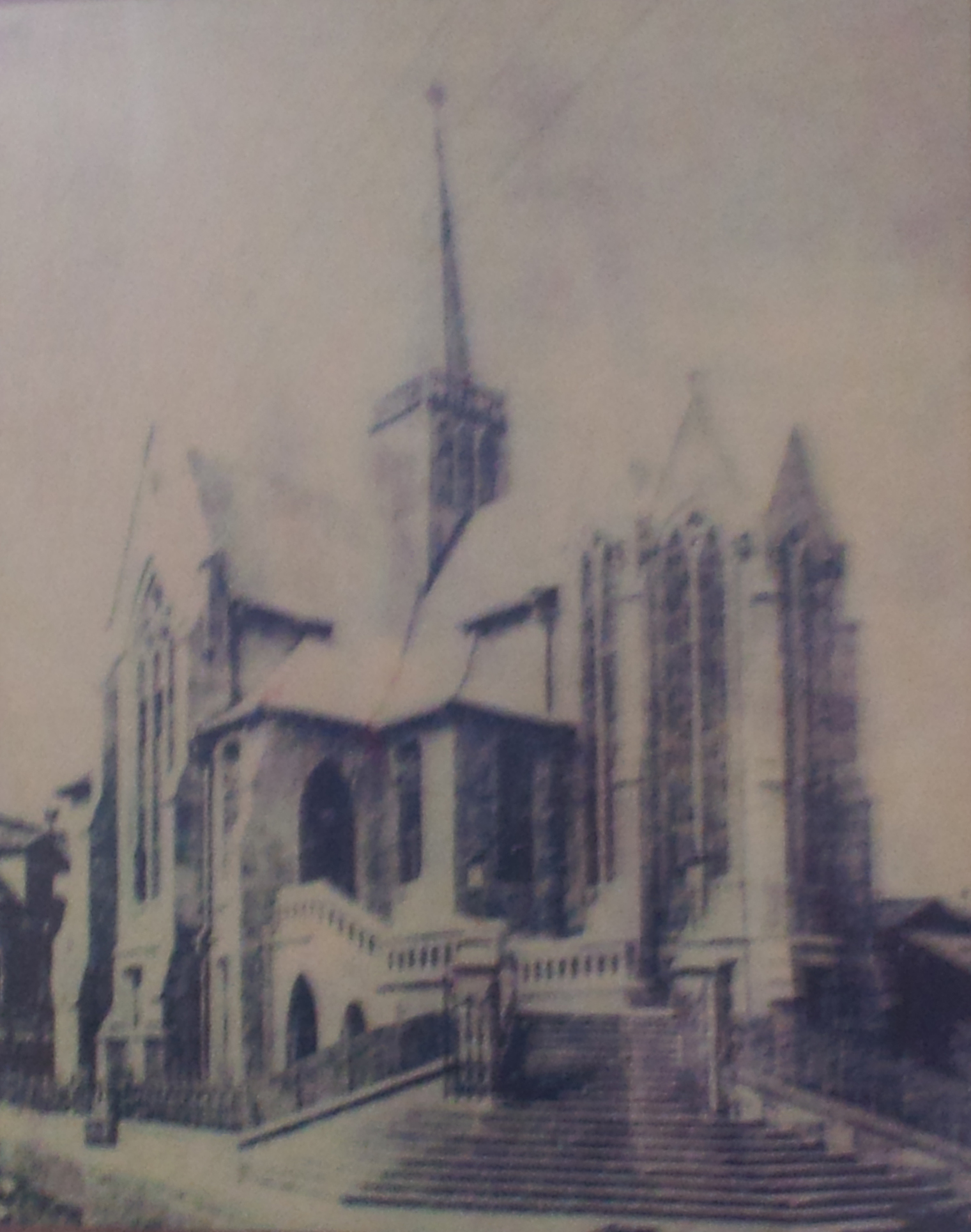
The church pastors did have this picture of the old church which was located on what is now a girl’s school nearby (Ferris). They do not believe that this is the church, because they hear it was built later (but there are no documentation to any of this)…

11/17/2011

Old Yokohama Union Church

…so I can’t say I stood where Kalakaua stood 130 years ago, but all I can say for sure is that it was close by…

In honor of Kalakaua’s birthday yesterday, I went in search of this church which he visited 130 years ago, 1881.

[Excerpt from:

“THE KING IN JAPAN

“Extremely Regal Welcome!

“Honored with the Cross of Japan!

“THE ENTIRE STORY FROM SAN FRANCISCO TO JAPAN!”]

On the 10th, the Royal One went to Yokohama, and joined in prayer with the Christians of Japan. In 1853, the churches of Hawaii donated One Thousand Dollars for the building of a church in Japan. The 10th of March was the opening. The King was invited to attend the opening of the church, and he agreed. When he walked into the church, he was lead to a high area. On the walls of the church, written in clear, large letters were:

Hawaii to Japan 1853.

Japan to Hawaii 1881.

Above the pulpit, on the wall was the letters: ALOHA. After the prayer, Doctor T. W. Gulick spoke on the reasons that the Hawaiian churches donated the money. He said, before the King left Hawaii, the King, the Attorney General, and Kale Kauka personally went to see the opening of the Chinese church in Honolulu; and on this day, they see in person the opening of the Japanese church. The people were overjoyed at the Kings good will, in his coming in person. At that, one of the Japanese elders stood and read a speech of welcome to the King in Japanese, and in the name of the Japanese Christians he gifted the King with a copy of the New Testament in Japanese. The King stood up and responded to the welcome speech by saying, he was happy to meet with the Christians of Japan, and that he was also overjoyed with the gift; because he believed the Christians of his nation would be thrilled to hear of the progress.

After the worship, a small party was held in a room close by, where gentlemen and ladies who entered into the family of Christians were shown to the King. At 7 in the evening, the Alii went to a party given by the Masons, and at 10 that night, he returned to Tokyo. It appeared as if the Christians of Japan were excited and happy at this appearance of the Alii. They looked at him as if he was not of the lower class, and when saw that their church was entered by a King of a far away land, and that he spoke before them and accepted the gift of the New Testament, none of them could control their nervousness. Here are the words of one of the Missionaries: “The King visiting the church is a great blessing to the Christians of Japan.”

  (Ko Hawaii Pae Aina, 4/23/1881, p. 2)

KA MOI MA IAPANA!

Ko Hawaii Pae Aina, Buke IV, Helu 17, Aoao 2. Aperila 23, 1881.