[Found under: “KELA ME KEIA.”]
In the window of the book store of Whitney and Robinson, there are a number of beautiful paintings drawn and painted by Hon. Joseph Nawahi of the lava that is frightening Hilo.
(Elele Poakolu, 7/6/1881, p. 1)


[Found under: “KELA ME KEIA.”]
In the window of the book store of Whitney and Robinson, there are a number of beautiful paintings drawn and painted by Hon. Joseph Nawahi of the lava that is frightening Hilo.
(Elele Poakolu, 7/6/1881, p. 1)
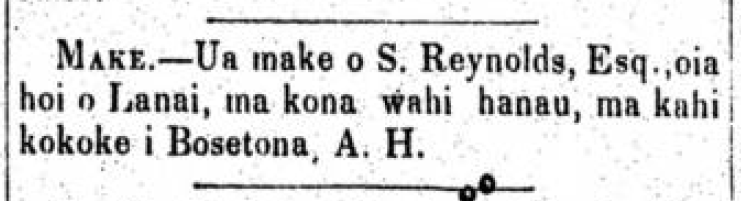
Dead.—S. Reynolds, Esq., that being Lanai, has died at his place of birth, near Boston, A. H.*
(Hae Hawaii, 9/23/1857, p. 102)
[When doing research on people in the newspapers, it is important to not only look up the given names of the person you are looking for, but also other names the person was known by. Here we see Lanai is what they called Stephen Reynolds.]
*A.H. probably stands for Amerika Huipuia (United States of America).
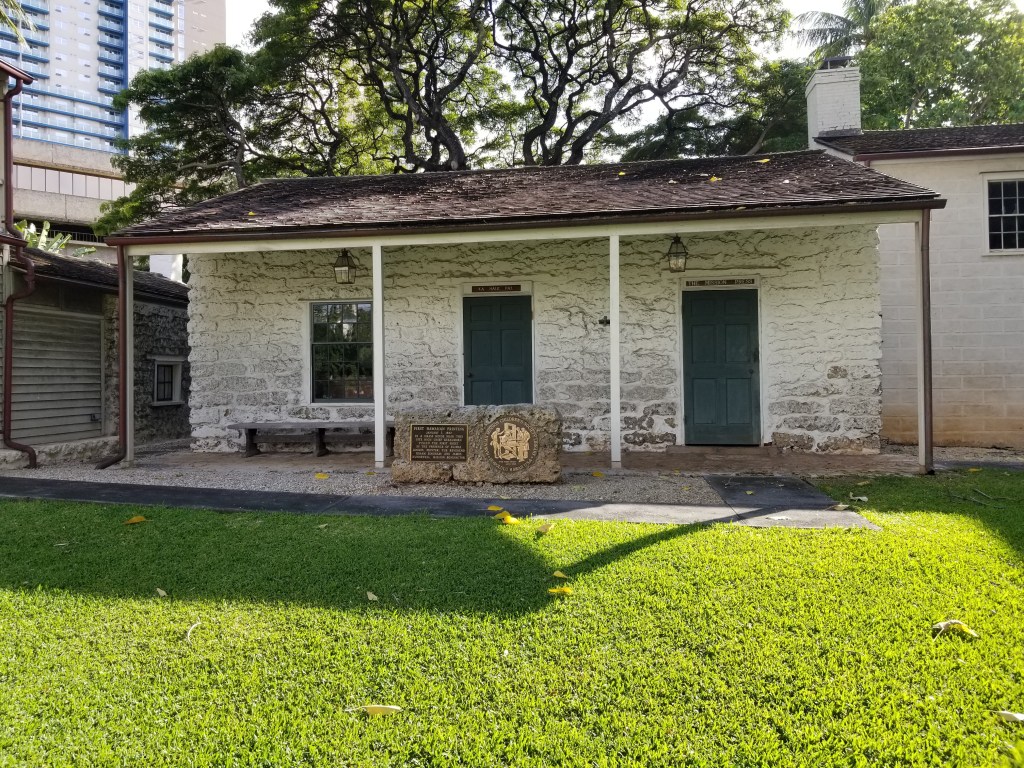
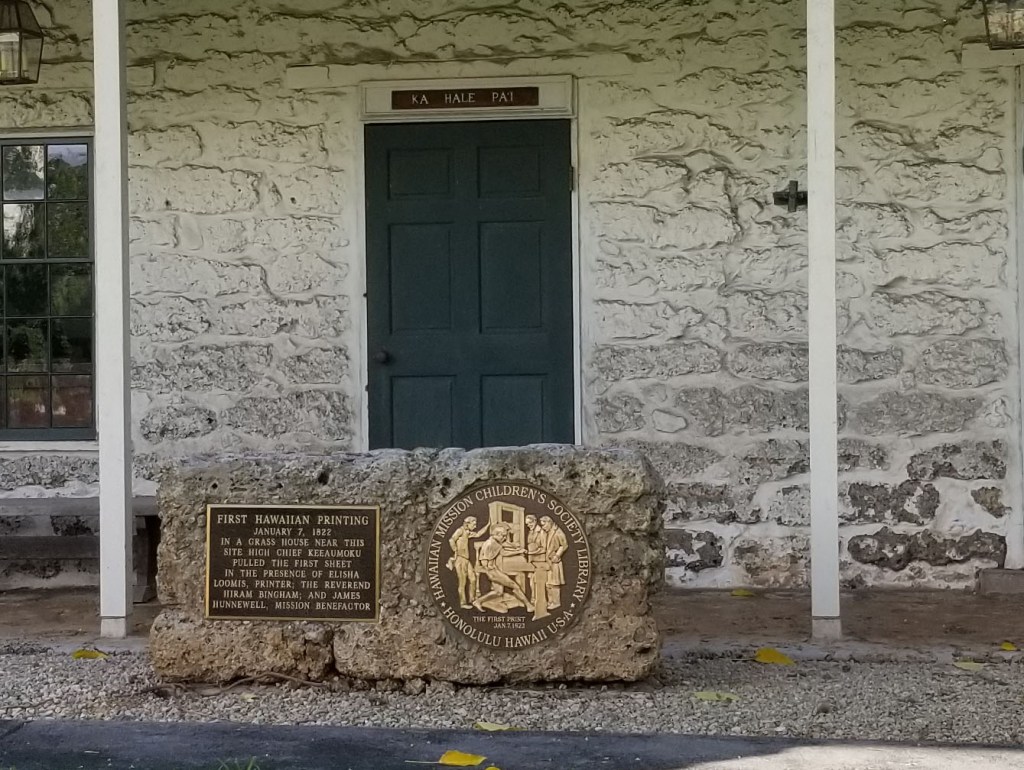
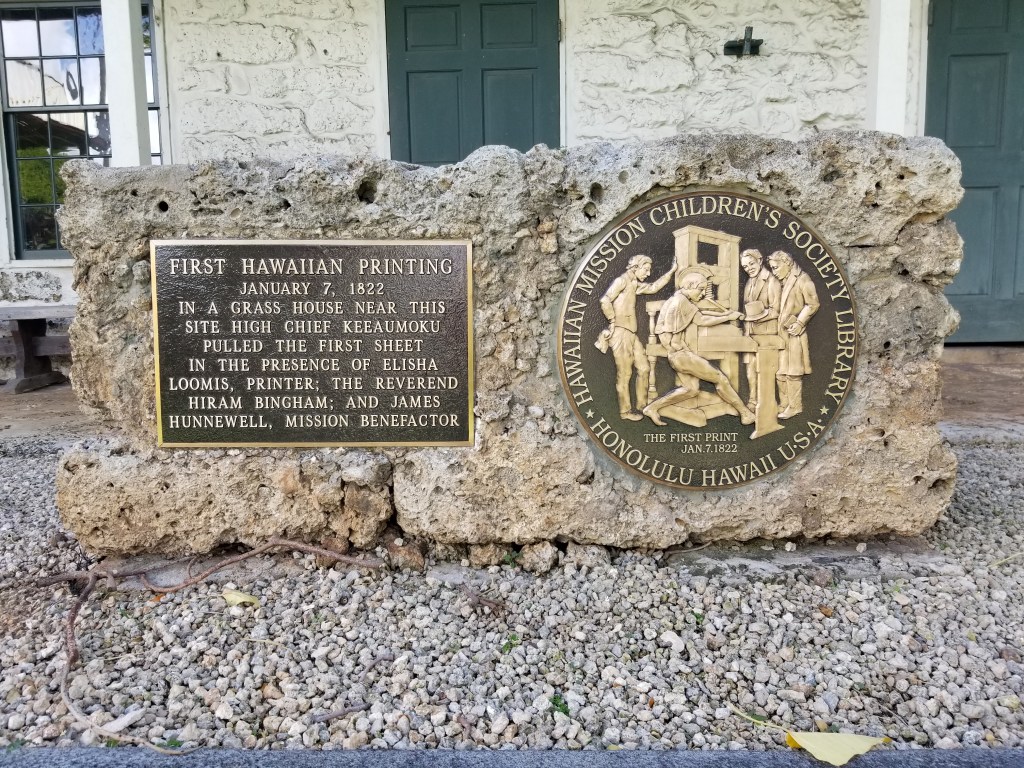
Tomorrow makes 200 years since the first printing took place in Hawaiʻi nei!
This commemorative plaque is in front of the Hale Paʻi at the Hawaiian Mission Houses in Honolulu. Tomorrow morning they are having a historic reenactment of the 1822 press pull in person and livestreamed as well!
For more information on this and other bicentennial commemorations they are holding this year, click on the images below.
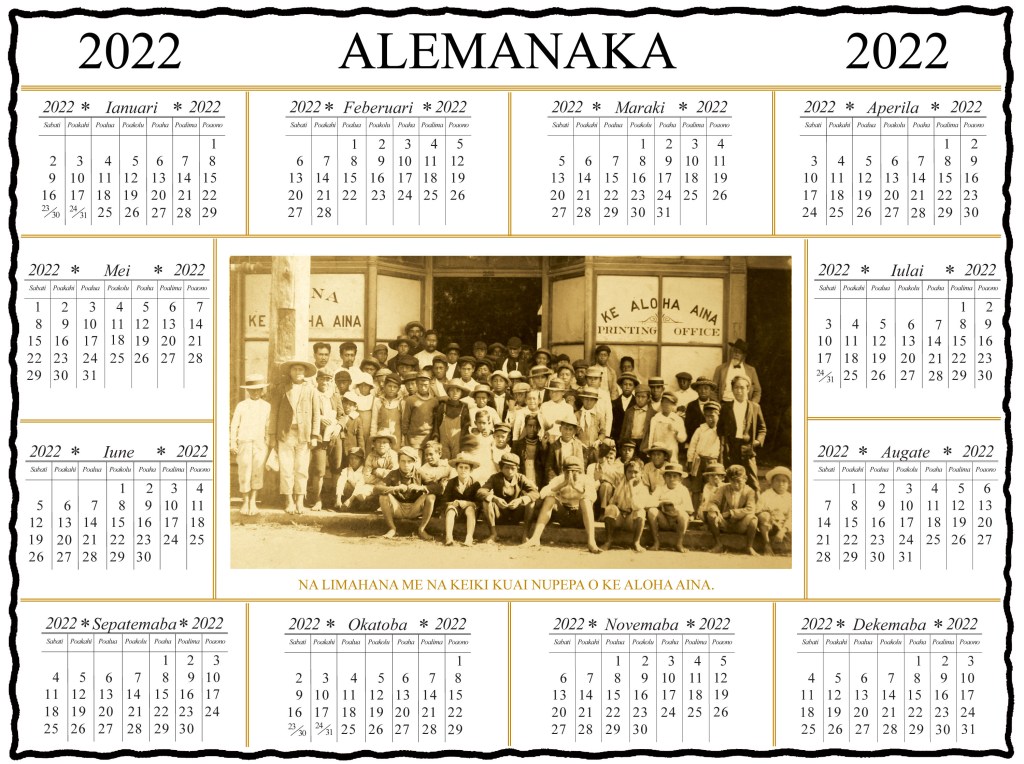
It has been a while since I made a calendar. The new year is almost here and I wanted to once again send you a new alemanaka following the original one put out by the Aloha Aina newspaper in 1906. Feel free to print it out for yourself or to share it with friends. To download the PDF file from which you can print, simply click on the image below.
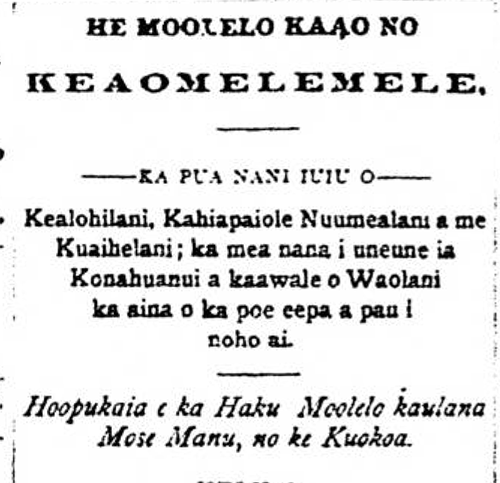
It has been 137 years since the famous Composer of Stories Moses Manu first published the story of Keaomelemele in Ka Nupepa Kuokoa. The story was translated by Mary Kawena Pukui many years ago and was first published in Hawaiian and English in 2002. It has been out of print for years.
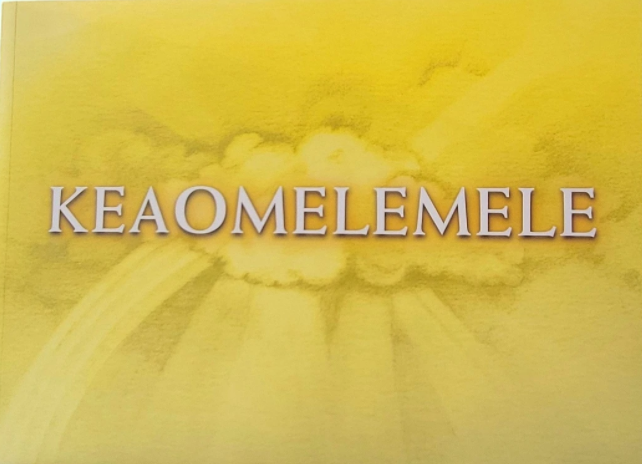
I just heard that Bishop Museum Press has finally received reprints of the book and it is now available for purchase! Click the image below to be taken to the Bishop Museum Press page where you can order a copy today.
I realize there have been no posts lately, but I have been taking a little break.
But today on the 10th anniversary since our first post(?!), I wanted to say thank you to those who have been spreading interest in the Hawaiian language newspapers. It is time that they are redigitized from the original newspapers, so an o is not confused with an e, or an m with a w, or a t with an l!
Queen Kapiʻolani’s motto was not, “Kūlia i kahi hiki.”
Kūlia i ka nuʻu.
Did you see the announcement from Bishop Museum Press saying that the Hawaiian and English Cross-Age Learning Picture Vocabulary Book is back in print after a long time of not being available. For more information about the book and how to order copies for people you know, click the image below.
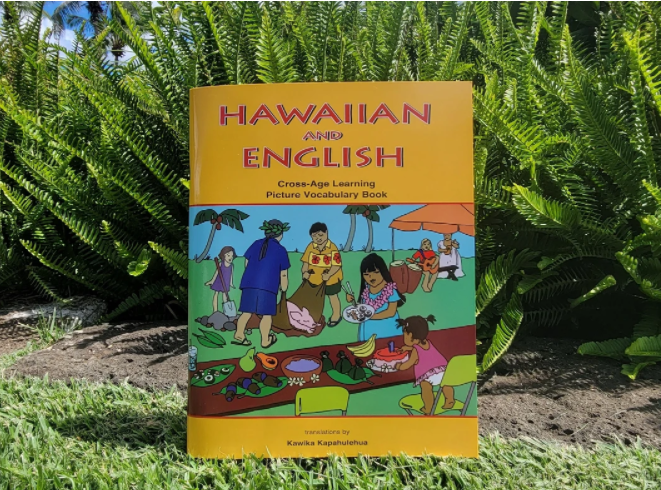
The reprint of the vocabulary book reminded me of an earlier column appearing in Hoku o Hawaii starting in 1938. It was called “He haawina i kekahi poe,” and was started to help people learn Hawaiian and to increase the number of subscriptions to the newspaper. This column would continue on until 4/19/1939. “Lesson in Hawaiian” followed from 4/26/1939 until 6/20/1945. Continue reading
Because of there being so much water in the Wailua Wailuku River, and this water running down here into Hilo Bay, there are a lot of octopus Continue reading
…I think if you wanted to sell your products, yes, you did.

Who Brought the First Horses to the Islands?—In a valuable document presented by Stephen Reynolds, Esq., to the R. H. A. Society at its first meeting in 1850, the following passage occurs:—Horses.—I have not been able to find the name of him who introduced the first. It appears two were brought and presented to Kamehameha; the natives say Mr. Manine was in the vessel. Several were brought before 1823. From 1824 to 1838 many cargoes were brought from California. The horses born and reared on the islands are superior in all respects to those imported from California,—better limbs, better spirits, and tougher animals.” Continue reading
 nupepa