Post Brown Bag: “The People of Kalaupapa as Active Participants in Their Own History.” 2012.

Much appreciation goes out to all the good people at the Center for Biographical Research at UHM! And to Anwei Skinsnes Law and Henry Law for their presentation today!! I came out of it feeling upbeat, and excited that there are people out there looking at Hawaiian-Language source material for a window into the past (outside of the University).

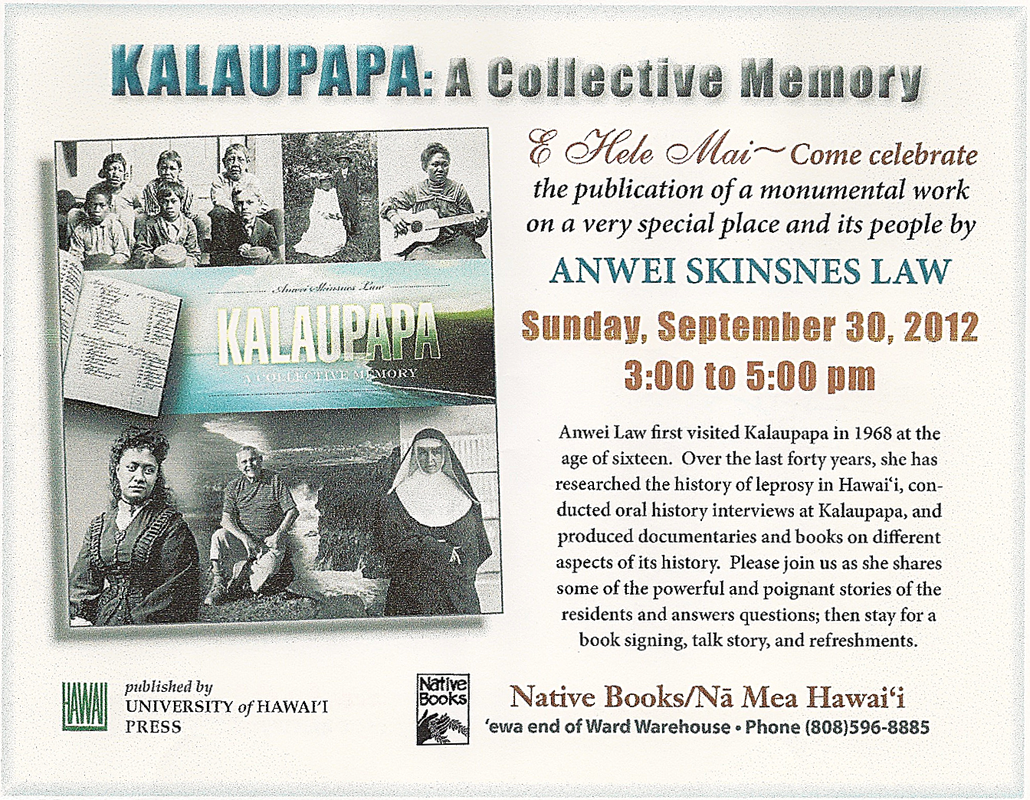
I encourage people to go check out the talk, questions and answers, and book signing put on by Native Books from 3 to 5 in the afternoon this Sunday.

Kalaupapa: A Collective Memory

Kalaupapa: A Collective Memory

Ka Ohana O Kalaupapa to Host Educational Workshops, 2012.

I neglected to post this related information about workshops being held by Ka Ohana o Kalaupapa in conjunction with the exhibits at Iolani Palace and the Maui Arts & Cultural Center. They say: “The workshops will provide a new perspective on the history of Kalaupapa and will encourage teachers to include the history in their curriculum.” This indeed sounds like a good thing! There in fact was one just yesterday evening. Did anyone get to attend? If yes, how did it go?

There is another one scheduled for the evening of the 2nd of October. For more information, check out the link below.

Teachers Workshops

“The People of Kalaupapa as Active Participants in Their Own History,” 2012.

Tomorrow at noon, there is a Brown Bag Presentation put on by The Center for Biographical Research at University of Hawaii at Manoa. The topic is looking at the Leprosy Colony on Molokai through Hawaiian-Language Material. It sounds like an immense but priceless project! If you are interested, find the details in the link below!!

“The People of Kalaupapa as Active Participants in Their Own History.”

An awesome follow up to a great fishing story, 2012.

I had the great honor the other day speaking first hand to Keoni Honl, the little boy who in 1937 caught a huge ahi in Makaweli using his throw net! If you did not see this post, one of my earliest on this blog, find it here:

A great fishing story from Makaweli, 1937.

John Honl is now 83 years young. He indeed threw net in his childhood, and remembered that there was a newspaper article written when he caught the famous fish. He says he spent his younger years spear fishing around Oahu, then moved to Kona, Hawaii in 1957, and ran a charter fishing boat named the Kakina for around 20 years! He is now retired and collecting Hawaiian memorabilia.

Talking to him was one of the most exciting things to happen to me in my twenty years or so of dabbling in the Hawaiian-Language Newspapers.

Mahalo to you, Mr. Honl!

Another blog to keep an eye on, 2012.

Here is another blog you might want to check out:

Kuamoolelo

Related to our posts this morning of death announcements by Sam M. Nihipali which are very descriptive and seem almost more poetry than prose… Kuamoolelo just posted a number of kanikau, which are mele written at the death of someone dear that one feels much aloha for. From these kanikau you can perhaps get a deeper feel for the emotion the composer felt for the deceased, and also often times detailed biographical information as well.

By any means, check them out and see what you can see.

On Owls and wishing organizations who have kuleana would fund reshooting the newspapers, 1893/2012.

Some Recollections about Birds

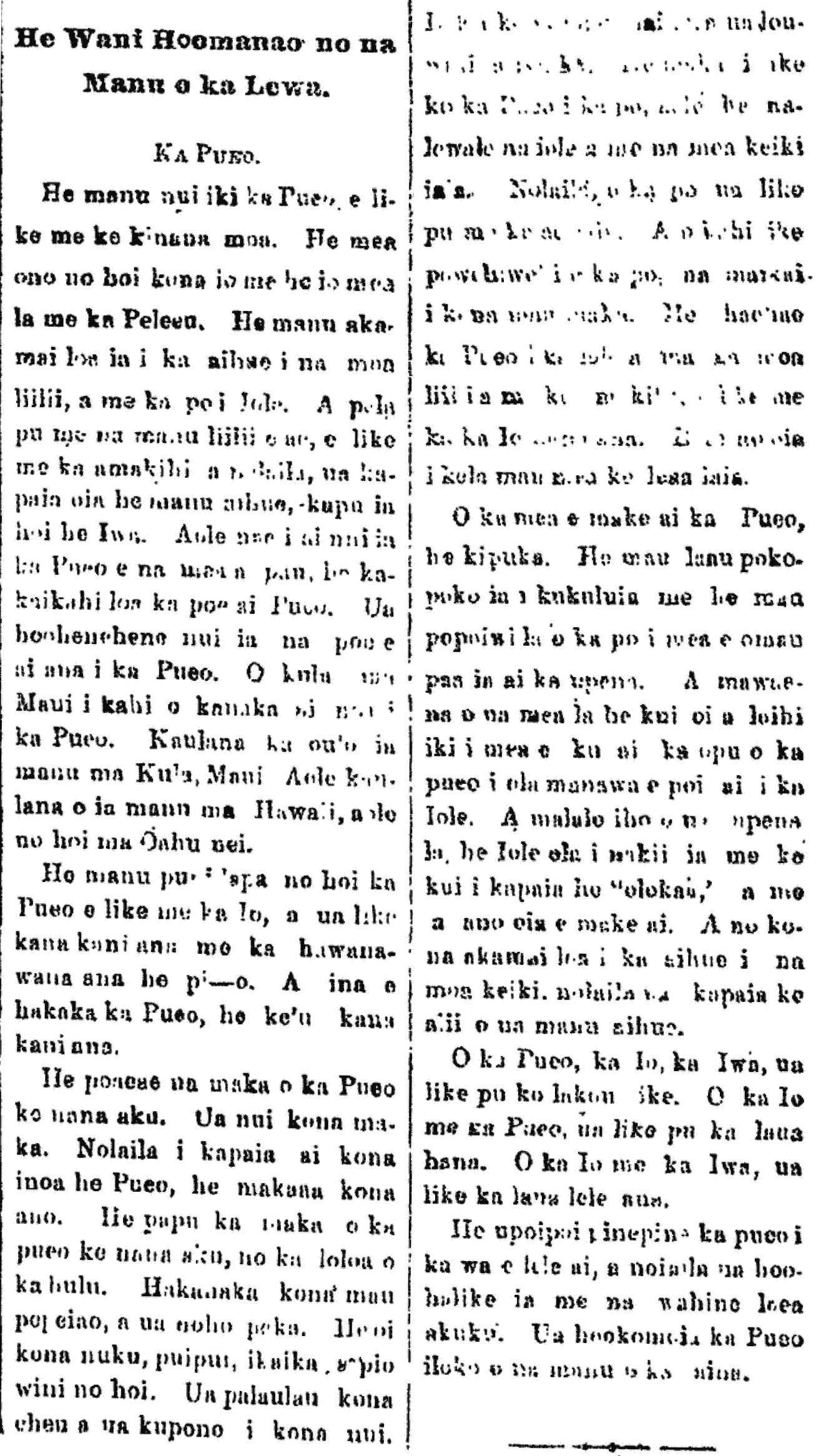
The Owl.

The Pueo is a smaller large bird, like a hen of a chicken. Its flesh is delicious like chicken or Turkey. It is a very intelligent bird in stealing chicks by swooping down. So too other small birds, like the amakihi, and therefore, it is called a thieving bird, and called an Iwa [Frigate bird]. The owl is not eaten regularly by most people, there are only a few that eat Pueo. Those who eat it are greatly ridiculed. It is in Kula, on Maui, that people eat a lot of Pueo. The perching of that bird is famous at Kula, Maui. This bird is not famous on Hawaii or here on Oahu.

The Pueo is ???? like a Hawk [Io], and its cry is like a whispering “pi——o”. And if the Pueo fights, it hoots.

The eyes of a Pueo are round. Its eyes are large. That is why it is called a Pueo, as it has staring eyes…

[This article goes on, but most of it is hard to make out. I am not even sure about that part that says Kula people ate a lot of owls because of the bad image. Maybe now that Hamilton Library has a super scanner, there can be progress made on reshooting all of the Hawaiian-Language Newspapers?!

Also this is part of a series on birds, but much of it and a lot of this paper in general is hard to read because of the bad images now available.]

(Lei Momi, 7/27/1893, p. 2)

He Wahi Hoomanao no na Manu o ka Lewa.

Ka Lei Momi, Buke I, Helu 30, Aoao 2. Iulai 27, 1893.

Bernice Pauahi Bishop Museum’s Government and Governance Digital Initiative, 2012.

I was at a presentation tonight by DeSoto Brown of the Bishop Museum on some of their treasures held in the Museum’s archives. Of particular interest to you all might be the number of new material that is available online and is word searchable!

Here is the search page for their Government and Governance: A Digital Initiative page.

One of the great many topics of interest is Leprosy.

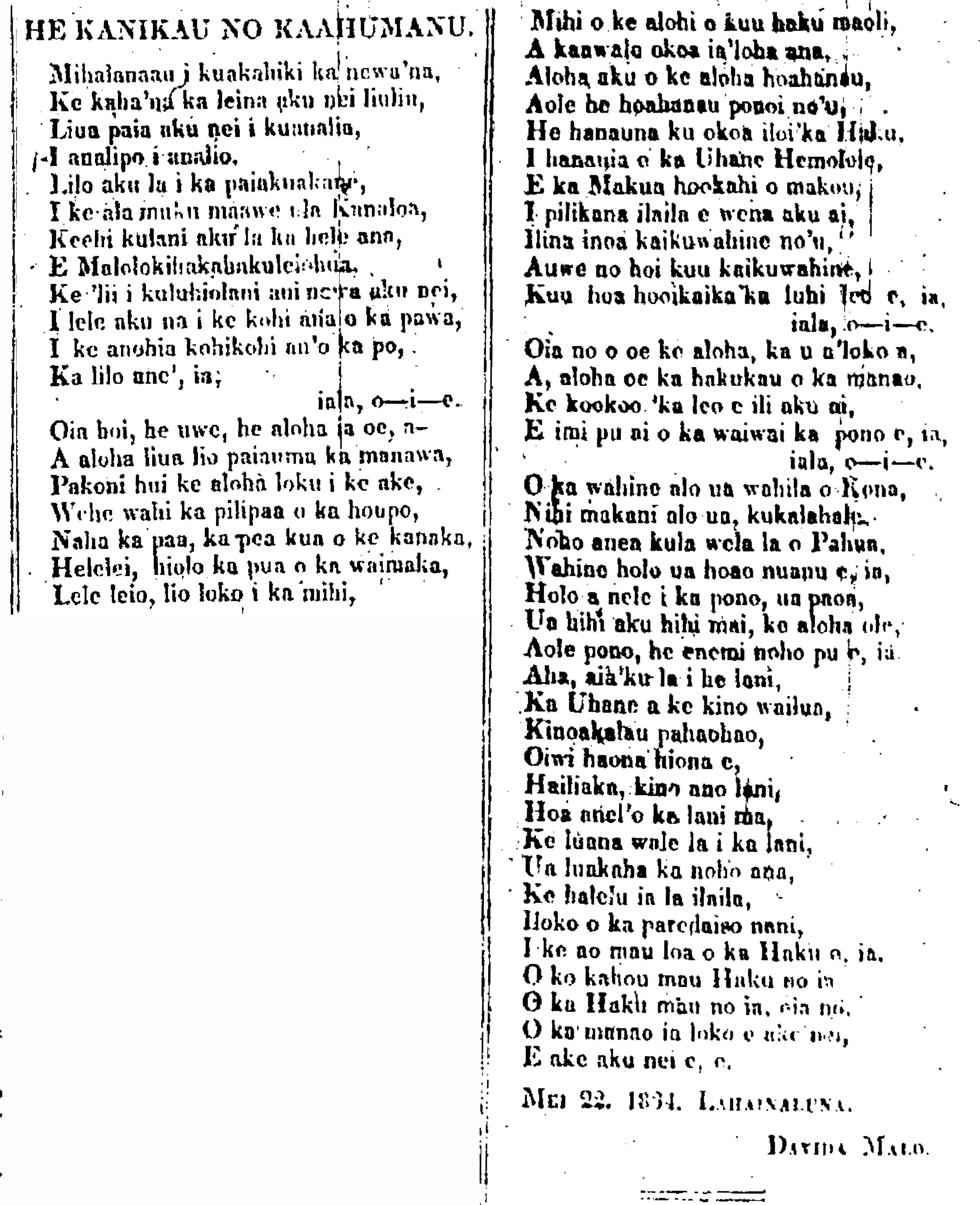
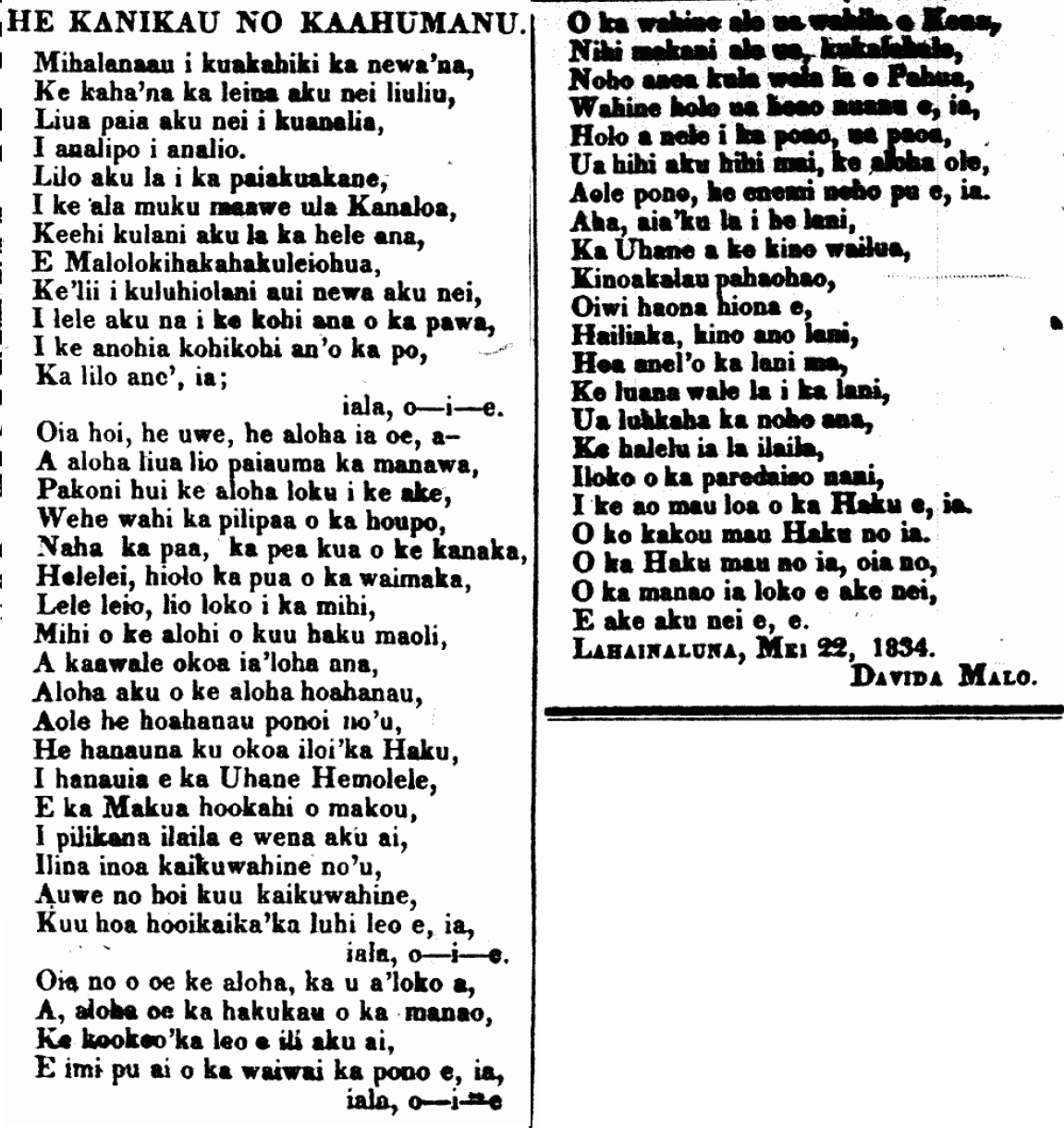
Here is Davida Malo’s kanikau for Kaahumanu as it was first published, 1834/1835.

HE KANIKAU NO KAAHUMANU.

Mihalanaau i kuakahiki ka newa’na,
Ke kaha’na ka leina aku nei liuliu,
Liua paia aku nei i kuanalia,
I analipo i analio.
Lilo aku la i ka paiakuakane,
I ke ala muku maawe ula Kanaloa,
Keehi kulani aku la ka hele ana,
E Malolokihakahakuleiohua.
Ke ‘lii i kuluhiolani aui newa aku nei,
I lele aku na i ke kohi ana o ka pawa,
I ke anohia kohikohi an’o ka po,
Ka lilo ane’, ia,
Oia hoi, he uwe, he aloha ia oe, aiala, o—i—e.
A aloha liua lio paiauma ka manawa,
Pakoni hui ke aloha loku i ke ake,
Wehe wahi ka pilipaa o ka houpo,
Naha ka paa, ka pea kua o ke kanaka,
Helelei, hiolo ka pua o ka waimaka,
Lele leio, lio loko i ka mihi,
Mihi o ke alohi o kuu haku maoli,
A kaawale okoa ia’loha ana,
Aloha aku o ke aloha hoahanau,
Aole he hoahanau ponoi no’u,
He hanauna ku okoa iloi ka Haku,
I hanauia o ka Uhane Hemolele,
E ka Makua hookahi o makou,
I pilikana ilaila e wena aku ai,
Ilina inoa kaikuwahine no’u,
Auwe no hoi kuu kaikuwahine,
Kuu hoa hooikaika ka luhi leo e, ia, iala, o—i—e.
Oia no o oe ke aloha, ka u a’loko a,
A, aloha oe ka hakukau o ka manao,
Ke kookoo ‘ka leo e ili aku ai,
E imi pu ai o ka waiwai ka pono e, ia, iala, o—i—e.
O ka wahine alo ua wahila o Kona,
Nihi makani alo ua, kukalahale.
Noho anea kula wela la o Pahua,
Wahine holo ua hoao nuanu e, ia,
Holo a nele i ka pono, ua paoa,
Ua hihi aku hihi mai, ke aloha ole,
Aole pono, he enemi noho pu e, ia.
Aha, aia’ku la i he lani,
Ka Uhane a ke kino wailua,
Kinoakalau pahaohao,
Oiwi haona hiona e,
Hailiaka, kino ano lani,
Hoa anel’o ka lani ma,
Ke luana wale la i ka lani,
Ua luakaha ka noho ana,
Ke halelu ia la ilaila,
Iloko o ka paredaiso nani,
I ke ao mau loa o ka Haku e, ia.
O ko kahou mau Haku no ia
O ka Haku mau no ia, oia no.
O ka manao ia loko e ake nei,
E ake aku nei e, e.
MEI 22, 1834. LAHAINALUNA.
DAVIDA MALO.

[As mentioned by Kuamoolelo, here is the earliest published appearance of Malo’s famous kanikau for Kaahumanu. Unfortunately the image is not so legible, i had to go back to the original to check it. Hopefully one day soon, some entity will understand how important clear images of the newspapers are, and they will fund this priceless undertaking!!]

(Lama Hawaii, 8/8/1834, p. 3)
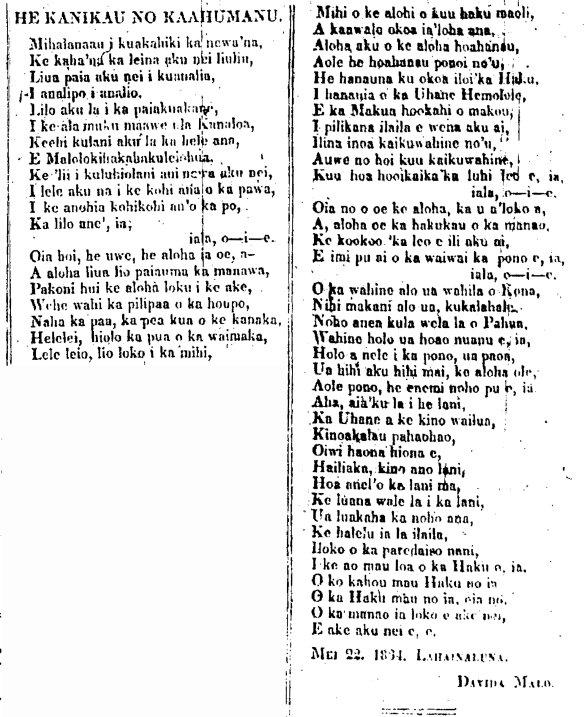
HE KANIKAU NO KAAHUMANU

Ka Lama Hawaii, Makahiki 1, Helu 17, Aoao 3. Augate 8, 1834.


HE KANIKAU NO KAAHUMANU.

Mihalanaau i kuakahiki ka newa’na,
Ke kaha’na ka leina aku nei liuliu,
Liua paia aku nei i kunolia,
I analipo i analio.
Lilo aku la i ka paiakuakane,
I ke ala muku maawe ula Kanaloa,
Keehi kulani aku la ka hele ana,
Ke’lii i kuluhiolani aui newa aku nei,
I lele aku na i ko kohi ana o ka pawa,
I ke anohia kohikohi an’o ka po,
Ka lilo ane’, ia;
iala, o—i—e.
Oia hoi, he uwe, he aloha ia oe, a—
A aloha liua lio paiauma ka manawa,
Pakoni hui ke aloha loku i ke ake,
Wehe wahi ka pilipaa o ka houpo,
Naha ka paa, ka pea kua o ke kanaka,
Helelei, hiolo ka pua o ka waimaka,
Lele leio, he loko i ka mihi,
Mihi a ke alohi o kuu haku maoli,
A kaawale okoa ia’loha ana,
Aloha aku o ke aloha hoahanau,
Aole he hoahanau ponoi no’u,
He hanauna ku okoa ilo’ika Haku,
I haupuia e ka Uhane Hemolele,
E ka Makua hookahi o makou,
I pilikana ilaila e wena aku ai,
Ilina inoa kaiakwahine no’u,
Auwe no hoi kuu kaikuwahine,
Kuu hoa hooikaika’ka luhi leo e, ia,
iala, o—i—e.
Oia no o oe ke aloha, ka u’aloko a,
A, aloha oe ka hakukau o ka manao,
Ke kookoo’ka leo e ili aku ai,
E imi pu ai o ka waiwai ka pono, e ia,
iala, o—i—e.
O ka wahine alo ua wahila o Kona,
Nihi makani alo ua, kukalahale,
Noho anea kula wela la o Pahua,
Wahine holo ua hoao auanu e, ia,
Holo a nele i ka pono, ua paoa,
Ua hihi aku hihi mai, ke aloha ole,
Aole pono, he enemi noho pu e, ia.
Aha, aia’ku la i he lani,
Ka Uhane a ke kino wailua,
Oiwi haona hiona e,
Hailiaka, kino ano lani,
Hea anei’o ka lani ma,
Ke luana wale la i ka lani,
Ua luakaha ka noho ana,
Ke halelu ia la ilaila,
Iloko o ka paredaiso nani,
I ke ao mau loa o ka Haku e, ia.
O ko lakou mau Haku no ia.
O ka Haku mau no ia, oia no,
O ka manao ia loko e ake nei,
E ake aku nei e, e.
LAHAINALUNA, MEI 22, 1834.

DAVIDA MALO.

[This is the second known publication of the kanikau. The image is a clearer, but not totally clear.]

(Kumu Hawaii, 10/28/1835, p. 176)
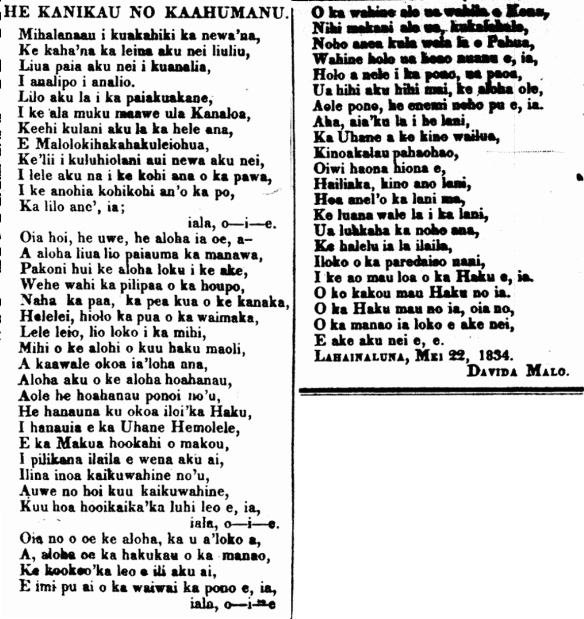
HE KANIKAU NO KAAHUMANU.

Ke Kumu Hawaii, Buke 1, Pepa 22, Aoao 176, Okatoba 28, 1835.