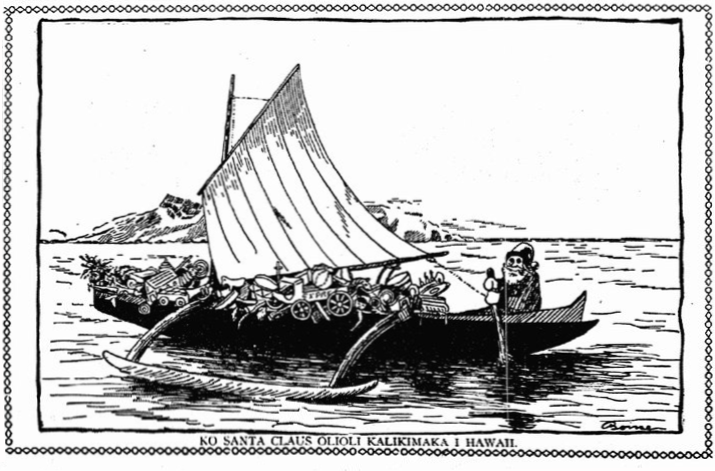
SANTA CLAUS’ CHRISTMAS JOY IN HAWAII.
[I hope Santa could fit this on his waa this year:
He malu ma ka honua, a he aloha no i kanaka.
Peace on earth and good will towards all people.]
(Kuokoa, 12/29/1905, p. 4)
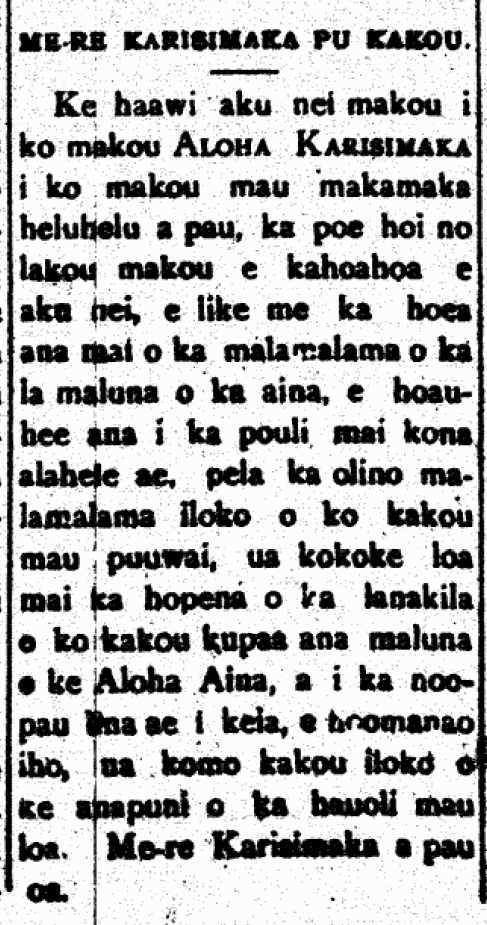
We give our ALOHA KARISIMAKA to all of our readers, to those people who we pray that just as the light of the sun reaches the land and dispels the darkness from its path, so too be the light shining in our hearts; we are near the conclusion of the victory in our loyalty behind the Aloha Aina [“Patriotism”], and after it is complete, remember that we will be surrounded by eternal happiness. Merry Christmas to all.
[I thought that this was just as fitting today as it was back then…]
(Aloha Aina, 12/26/1896, p. 2)
We mostly just talk about words from the past here on this blog, but check this out… Words from today! And this could help you to better understand words from the past!! Go check them out, go!!!
From Oiwi TV
It seems that the fishing season for amaama is still the same today as it was back a hundred years ago…
ANNUAL CLOSURE OF ‘AMA ‘AMA (STRIPED MULLET)
SEASON TAKES EFFECT DECEMBER 1, 2011
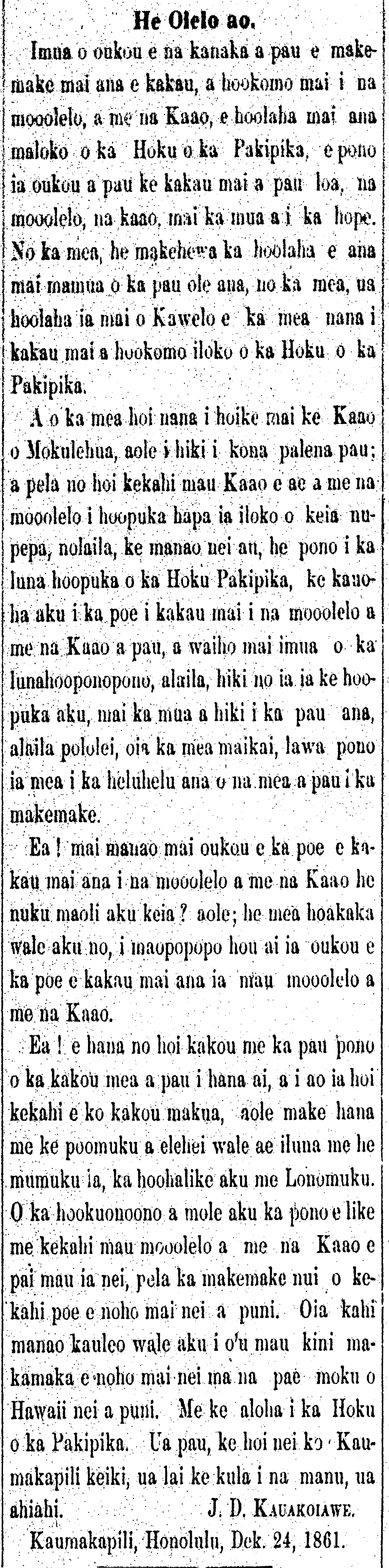
Before you, all those who want to write and publish stories (mooolelo and kaao) in the Hoku o ka Pakipika: you must all write the whole story from the beginning all the way until the end. Because it will be a waste of time to start printing before it is completed, as Kawelo by the person who submitted it, was printed in the Hoku o ka Pakipika [“Mooolelo no Kawelo” by S. K. Kawailiula from 9/26/1861 to 12/5/1861—5 helu total].
And as for the person who submitted the story of Mokulehua, he did not get to the end [“He wahi Kaao no Mokulehua” begins on 11/28/1861, and in the Helu 2 (12/5/1861), there is a note from the editor at the bottom, “Send in more of the story of Mokulehua; make it quick lest the Hoku o ka Pakipika give you a kick.” Helu 3 in the next issue (12/12/1861) is very short, and there is a long hiatus until well after this letter is published. It finally reappears as “He Moolelo no Mokulehua on 3/13/1862 to 3/27/1862, 6 Helu in total, by B. K. H.**.]; and so too of some other kaao and mooolelo that were published partially in this newspaper; therefore, i feel that it is necessary for the editor of the Hoku o ka Pakipika to require that those who write in mooolelo and kaao to complete it and then to put it before the editor, and then it can be printed from beginning to end, and it is right and good, and everyone who reads it will be satisfied.
Now then! all you people who write in mooolelo and kaao, don’t take this as a critique; no, it is just clarification, so that you all know.
Now then! let’s all finish everything we start properly, as some of us were taught by our parents: don’t do things leaving off the beginning, cutting off the top like a maimed one, imitating Lonomuku. What is necessary is to make it well-rooted, as are some of the mooolelo and kaao that are being published, and that is what what people all over really want. This is just encouragement to all my friends living throughout these Hawaiian islands. With aloha to the Hoku o ka Pakipika. I am done, Kaumakapili’s child returns, as the fields are tranquil with birds and it is eventide. J. D. KAUAKOIAWE.
Kaumakapili, Honolulu, Dec. 24, 1861.
(Hoku o ka Pakipika, 1/2/1862, p. 4)
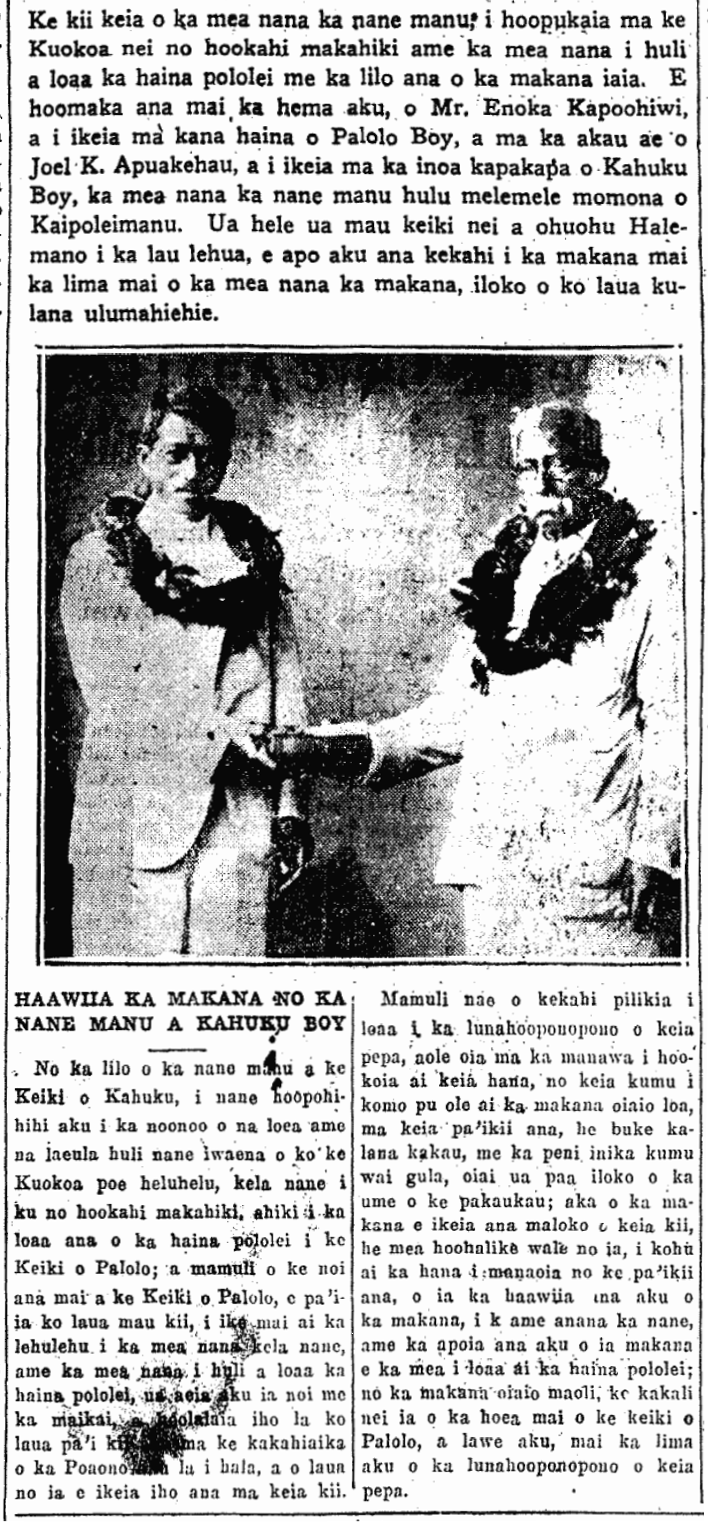
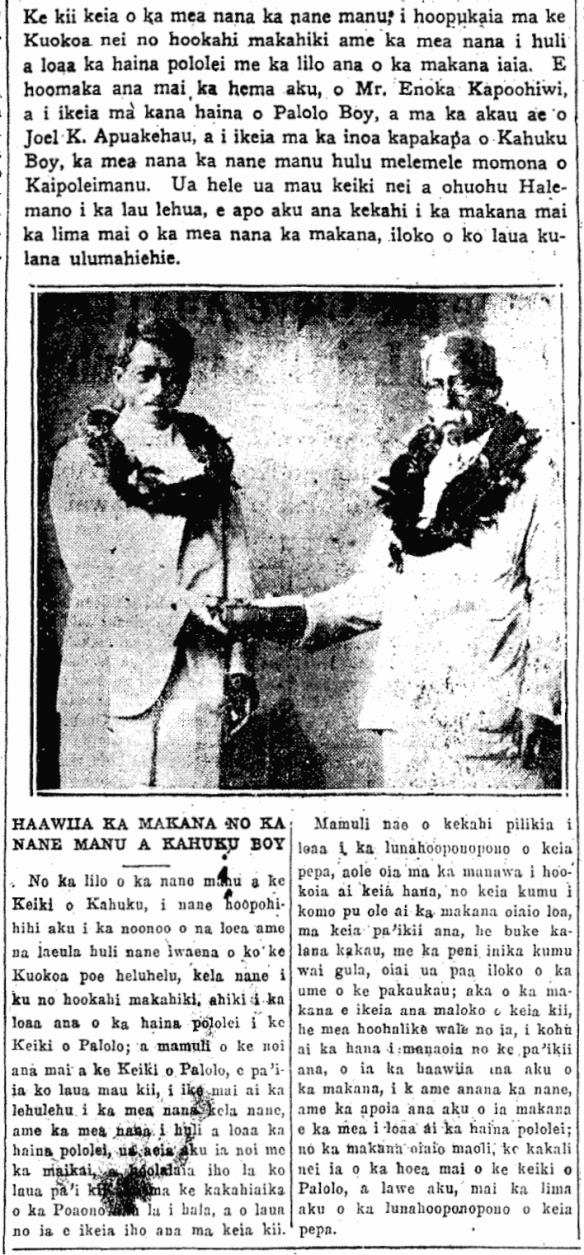
This is a picture of the person whose bird riddle (nane) it was that was published in the Kuokoa for a year, and of the one who searched and found the correct answer and won the prize. Starting from the left is Mr. Enoka Kapoohiwi, who is known by his answer as Palolo Boy; and to his right is Joel K. Apuakehau, and he is known by his pen name, Kahuku Boy, the one to whom belongs the sweet yellow-feathered bird riddle of Kaipoleimanu. These boys are all decked out, as one receives the prize from the hands of the other who offered the prize, as they pose festively.
Because the nane of Kahuku Boy was one which befuddled the experts and well-trained riddle solvers amongst the readership of the Kuokoa, that nane which stood for over year before the correct answer was found by the boy from Palolo; and because it was requested by that Palolo Boy, that a picture be taken of the two of them so that everyone might see the person who composed the nane and the one who searched and found the correct answer; his request was warmly fulfilled, and their picture taking was scheduled for the morning of this past Saturday, and it is the two of them who is seen in the photo.
Because of some difficulties encountered by the editor of this paper, he wasn’t present at the time this event was carried out, and as a result, the real prize does not appear in this photo taking (it was a writing book and a gold-colored pen which was put away in a drawer); the prize you see in the picture is just a stand in so that the desired picture could be shot, that being the presenting of the prize by the one who composed the nane, and the accepting of the prize by the one who had the correct answer; as for the real prize, we await the arrival of that boy from Palolo, to receive it from the hands of the editor of this paper.
[Nane are seen all through the life of the Hawaiian-Language Newspapers. One person would send in a nane to the editor, along with the correct answer. Readers of the paper would then send in their answers. The newspaper editor would often respond to incorrect answers with funny retorts spurring on people to think harder.]
[Pen names seem to naturally go along with nane (although there were many people who used them for submitting letter, articles, or poetry in general). Just a few examples are Kolu Lima Hiku, Hakalau Boy, Waihanau Boy, Sionala, Waiomao Boy, and Kakelakuikealopali. Without other information, like the article above, we may never know their real names. Perhaps the most famous of them all was Z. P. K. Kawaikaumaiikamakaokaopua, which was the pen name of Z. P. K. Kalokuokamaile.]
(Kuokoa, 7/23/1925, p. 2)
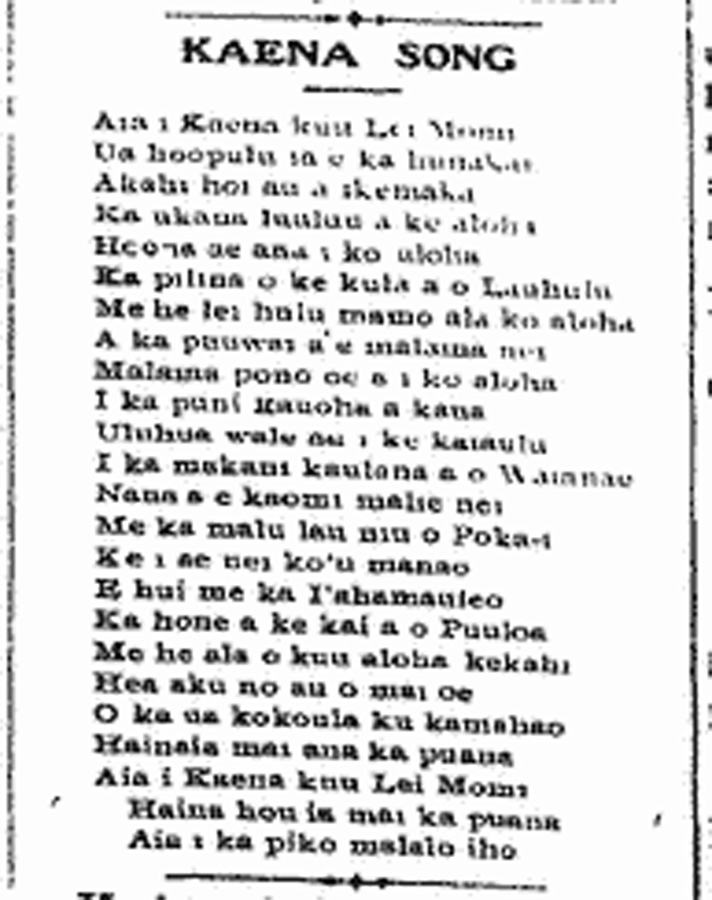
Aia i Kaena kuu Lei Momi
Ua hoopulu ia e ka hunakai
Akahi hoi au a ikemaka
Ka ukana luuluu a ke aloha
Hoona ae ana i ko aloha
Ka pilina o ke kula a o Lauhulu
Me he lei hulu mamo ala ko aloha
A ka puuwai a e malama nei
Malama pono oe a i ko aloha
I ka puni kauoha a kaua
Uluhua wale au i ke kaiaulu
I ka makani kaulana a o Waianae
Nana a e kaomi malie nei
Me ka malu lau niu o Poka-i
Ke i ae nei ko’u manao
E hui me ka I’ahamauleo
Ka hone a ke kai a o Puuloa
Me he ala o kuu aloha kekahi
Hea aku no au o mai oe
O ka ua kokoula ku kamahao
Hainaia mai ana ka puana
Aia i Kaena kuu Lei Momi
Haina hou ia mai ka puana
Aia i ka piko malalo iho
[Versions of familiar mele like this one (attributed to Samuel K. Halstead), and many others not heard today, are found all over the newspapers! There is so much that the haku mele of today can learn from them, if they would just look back…]
[A large portion of the digital images for this paper are illegible, and hopefully they will be reshot before it is too late.]
(Holomua, 12/20/1913, p. 4)
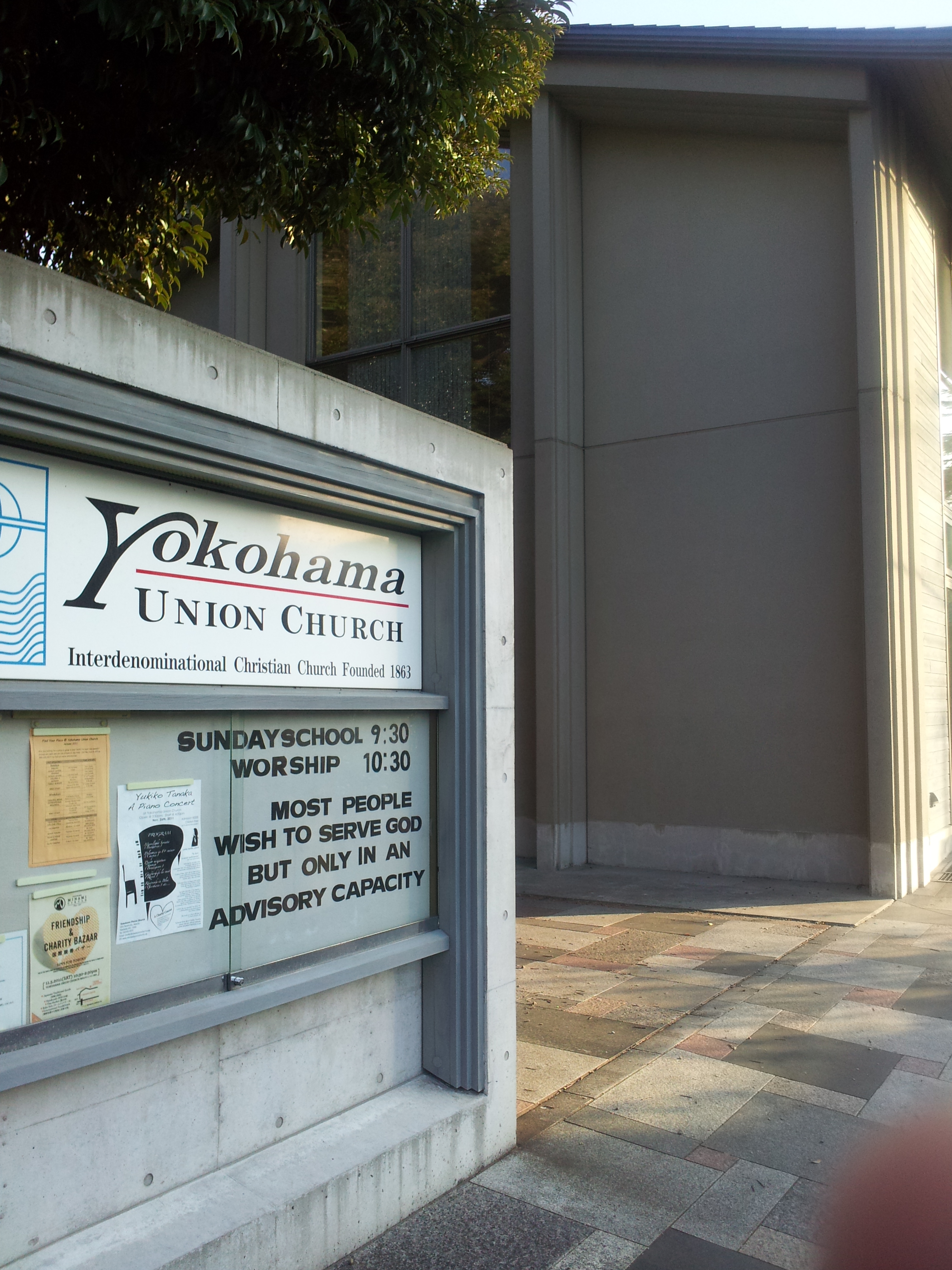
[So i am still looking for that Bible given at the Yokohama Union Church to King Kalakaua, when he visited there in 1881. Check out these other articles found in The Friend]
And the other article referred to therein,
“Cast Thy Bread upon the Waters and Thou Shalt find it after Many Days.“
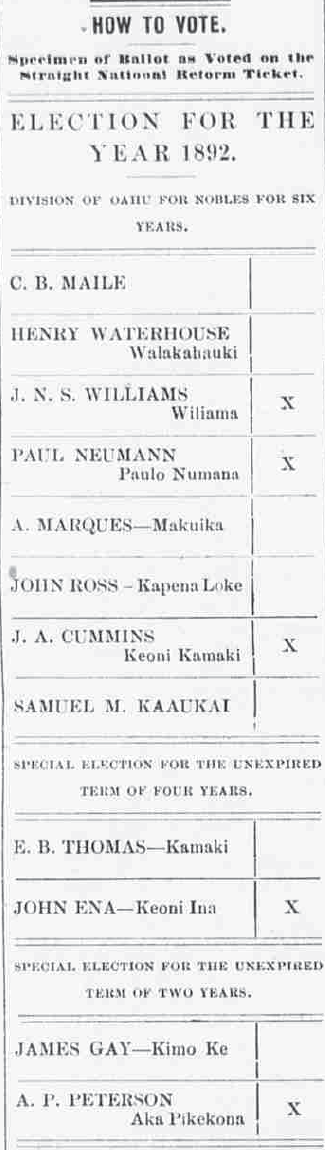
[It would be very helpful if there was some sort of great listing of Hawaiianized names readily available, because often times unless you just know, or are lucky enough to have another reference, you will not know who is being spoken about or even sometimes how to pronounce the name. Notice in this sample ballot:]
Henry Waterhouse, Walakahauki
J. N. S. Williams, Wiliama
Paul Neumann, Paulo Numana
A. Marques, Makuika
John Ross, Kapena Loke
J. A. Cummins, Keoni Kamaki
E. B. Thomas, Kamaki
John Ena, Keoni Ina
James Gay, Kimo Ke
A. P. Peterson, Aka Pikekona
[What it is even trickier is when there are multiple names for the same person. For instance, Waterhouse is “Walakahauki,” “Walakahausi,” “Halewai,”…]
(Daily Bulletin, 2/1/1892, p. 2)
The people in the archives were helpful and showed me the Union Church in Yokohama on a modern map. So I finally ended up here.
66-2 Yamate-cho, Naka-ku, Yokohama.
…obviously it is was a new building. So I went to talk to the pastors and they had no idea of the history of the church even after being there for more than 10 years. It seems history is lost with earthquakes and bombings.