HATS AND HABITATIONS.
Theory of Relation Between Houses and Headgear Expounded by an Architect.
“Hats and Houses” was the subject of a novel 20-minute illustrated talk lately given by Edgar Allen Poe Newcomb, the architect, in the rooms of the Young Women’s Christian association, says the Honolulu Advertiser. Mr. Newcomb’s address was intended to show the relationship of the headgear of various peoples in both ancient and modern times to their habitations and public buildings. In 40 large colored illustrations, designed personally by Mr. Newcomb, the similarity was made striking. The designs were arranged in pairs, one to show the hat and manner of wearing, and the other the style of architecture based upon it.
The speaker began by saying that his talk was upon “Hats and Houses, or Headgear and Habitation,” but which should come first in order was difficult to determine, as difficult as it is to determine whether primitive man wore clothes before he chose his cave. He said that every nation under the sun has its own style of architecture, as well as certain kind of headgear peculiar to its people. Helmets, turbans, miters, bonnets, hats and wigs seem to bear a certain likeness to domes, spires, turrets, pagodas, gables and frontons, but just why this should be he was unable to say.
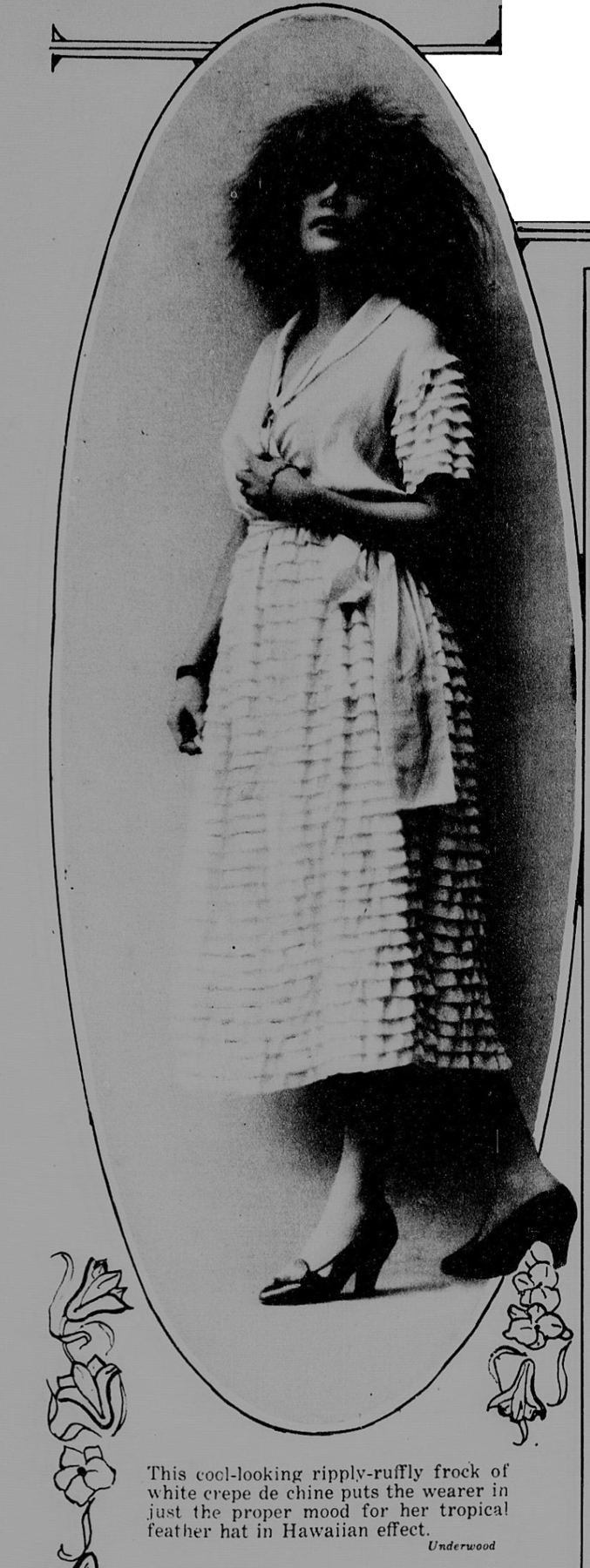
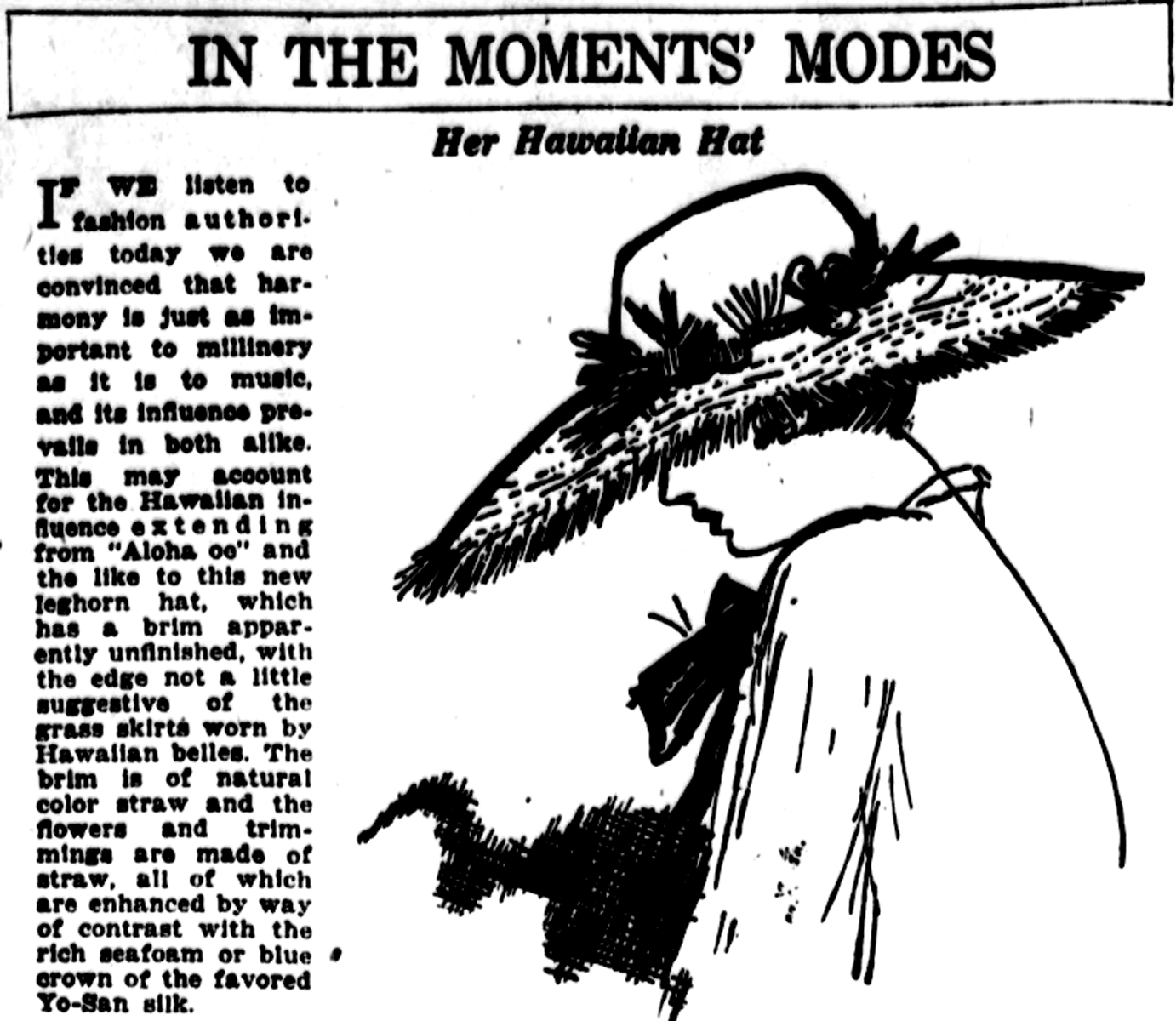
In some of the examples shown Mr. Newcomb called attention to the fact that the headdress bore the form of the whole building, as in the Hawaiian, Laplander and Egyptian styles; in some it resembled only the crowning point of the building, as in the Grecian, Roman, Russian and Turkish styles, and in others the form was only carried through the detail of the building, as in the Rococo style. Speaking of the ancient styles of architecture, he called attention to the grass house of the Hawaiian islands, which seemed to have been the prevailing style long before civilization placed her frigid finger on the natives and turned their attention to clothes. What the natives first took to he was unable to say, but he knew that the Hawaiian hat as worn to-day was one of the characteristic things now made and worn here. He showed an illustration of the lei-bedecked hat and also a companion picture of an old-time grass hut, the similarity of appearance being remarkable. Next was shown a picture of Egyptian wearing the peculiar headgear which is seen in the architectural features of their temples—a flat top with the sides diverging. The tall pagoda-shaped hats of the Chinese showed a remarkable likeness to the pagoda temples of the celestial empire. Continue reading →


 nupepa